Skip to Main Content

The UK’s leading supplier of soundproofing solutions

What type of Wall?
What type of Floor?
What type of Ceiling?
Back to Help, Info & Tips

Soundproofing Ceilings with the AcoustiClip Timber Ceiling System
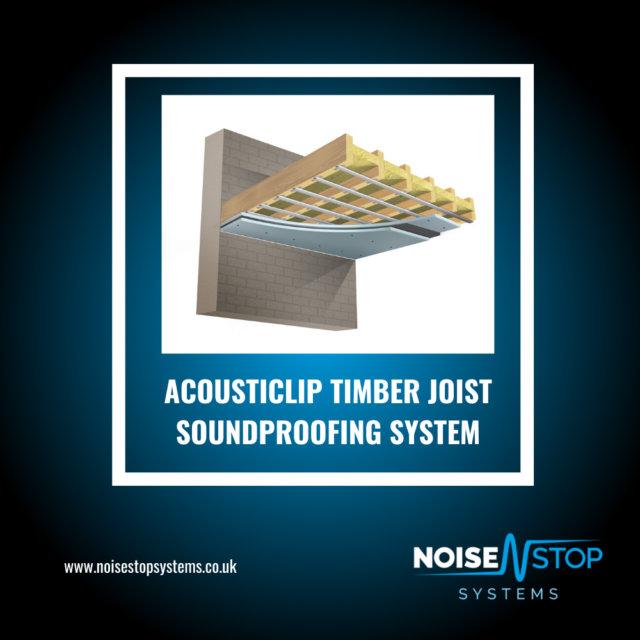
soundproof ceilings with the acousticlip timber joist soundproofing system


The Ultimate Guide to Soundproofing Ceilings with the AcoustiClip Timber Ceiling System

Whether you’re living in a busy multi-storey dwelling, soundproofing your home, working towards Part E of the Building Regulations or upgrading a commercial space, unwanted noise transmission through ceilings can be frustrating. Sound travels easily between untreated floors and ceilings. Still, with the right design and products, you can dramatically cut both airborne noise (voices, music, television) and impact noise (footsteps, dropped objects, vibrations). One of the most effective solutions on the market today is the AcoustiClip Timber Ceiling System.

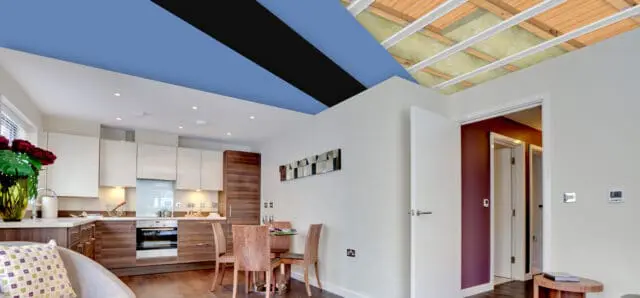
Stops airborne and impact noise using the AcoustiClip Timber Ceiling System

Before we dive into the solution, it’s helpful to understand the two main types of noise that can pass through a ceiling:

Airborne Noise

Airborne sound that travels through the air, such as conversations, TV or music, and radiates through cavities and lightweight structures. Ceilings with inadequate mass or insulation act like loudspeakers, transmitting noise easily from room to room.

Impact Noise

Impact noise doesn’t travel through the air but through physical contact and vibration — for example, footsteps, dropping objects, or children playing upstairs. These low-frequency sounds are more complex to stop because they travel through solid structures like joists and plasterboard.
This comprehensive soundproofing approach is where the AcoustiClip Timber Ceiling System excels, tackling both types of noise.

What makes the AcoustiClip Timber Ceiling System the best choice for soundproofing ceilings

The AcoustiClip system has been developed to address all the key elements of effective ceiling soundproofing. We have broken down the main aspects of the AcoustiClip Timber joist soundproofing system to show you why it is so effective at stopping sound from passing through ceilings.

Decoupling ceilings with AcoustiClips

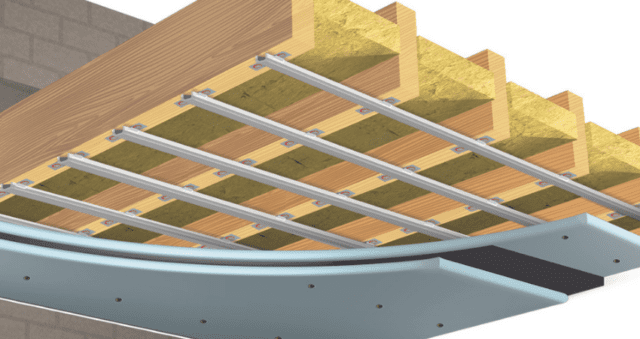
AcoustiClip and channel decouple the existing ceiling from the new acoustic ceiling
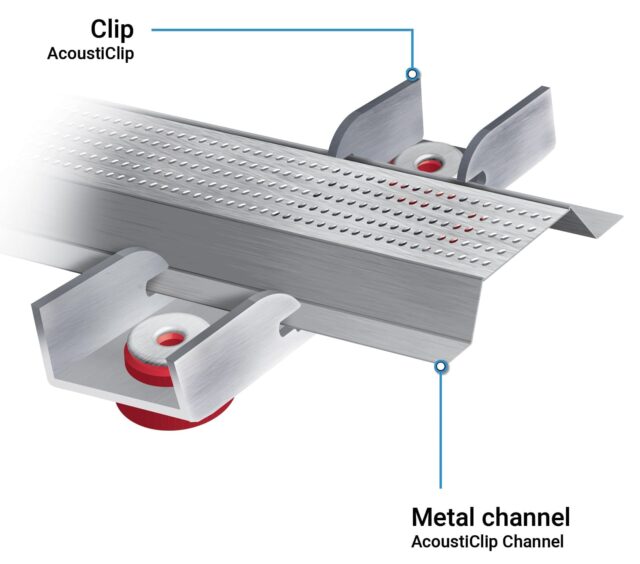
acousticlip and acoustichannel section


AcoustiClip – Decoupling Clip

One of the core principles of successful soundproofing is decoupling/isolating — meaning physically separating the ceiling from the structural frame so that vibrations don’t travel straight through. Standard ceilings are rigidly fixed to joists, which easily transmit sound. AcoustiClips introduce a resilient, flexible connection point that effectively isolates the plasterboard from the timber joists. This drastically reduces both airborne noise and impact sound transfer by breaking the vibration path — making it one of the most impactful elements of the system.
Why decoupling is critical: Sound is energy, and rigid connections act as a bridge for that energy. By introducing flexible isolation clips between the joist and board, vibration energy is interrupted.

High-Density Acoustic DFM Insulation between joists

Add mass to ceilings and stop reverberation with acoustic insulation between ceiling joists
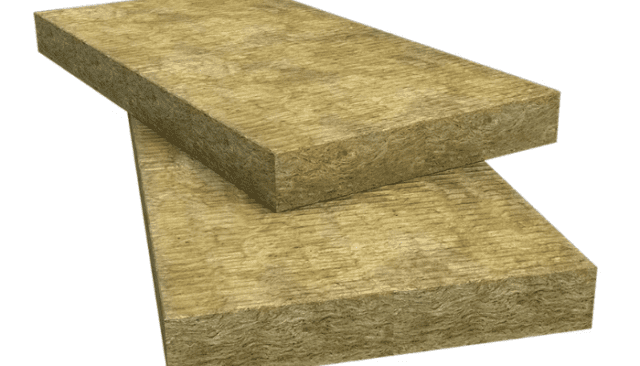
 

acoustic insulation slabs add mass and sound absorption


DFM – Acoustic Insulation

Adding insulation between joists serves two key purposes:
  • It adds mass and density to the cavity, thereby improving sound absorption.
  • It reduces the amount of airborne noise that reflects and resonates inside the joist cavity.
High-density acoustic insulation (such as DFM, which stands for “Dense Fibre Mineral” insulation) is especially effective because its greater mass and fibrous makeup trap sound waves more efficiently than standard insulation materials. The result is a dramatic reduction in reverberation and airborne noise transmission through the ceiling.

In addition to insulation, the Noisestop 1 Plus Panel provides an extra layer of protection, combining  Mass-Loaded Vinyl (MLV) and Acoustic Plasterboard

Noisestop 1 Plus incorporates MLV with soundproof plasterboard
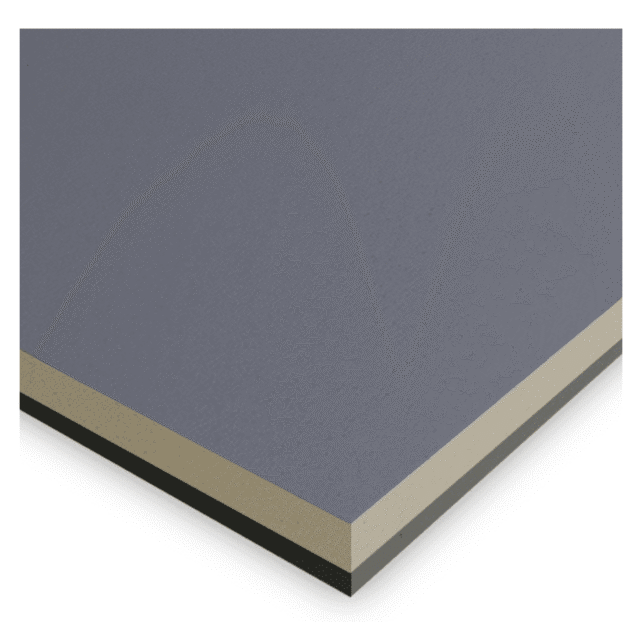
soundproof panel noisestop 1 plus 18mm board


Noisestop 1 Plus Panel

Another significant component of a high-performance soundproof ceiling is increased mass. It is harder for sound to transmit through denser, heavier materials:
  • Noisestop 1 Plus Panels combine MLV (Mass-Loaded Vinyl, a dense, flexible material designed to block sound) with soundproof plasterboard for exceptional sound attenuation.
  • Mass-Loaded Vinyl (MLV) is a specialised, dense, flexible sound-blocking material that adds substantial mass to the ceiling assembly, helping resist airborne sound.
  • When combined with soundproof plasterboards, you create a multi-layer system — increasing both mass and damping.
This layering strategy works because sound energy weakens as it passes through different materials, especially when each material has different density and elasticity characteristics.

The AcoustiClip Timber Ceiling System in full

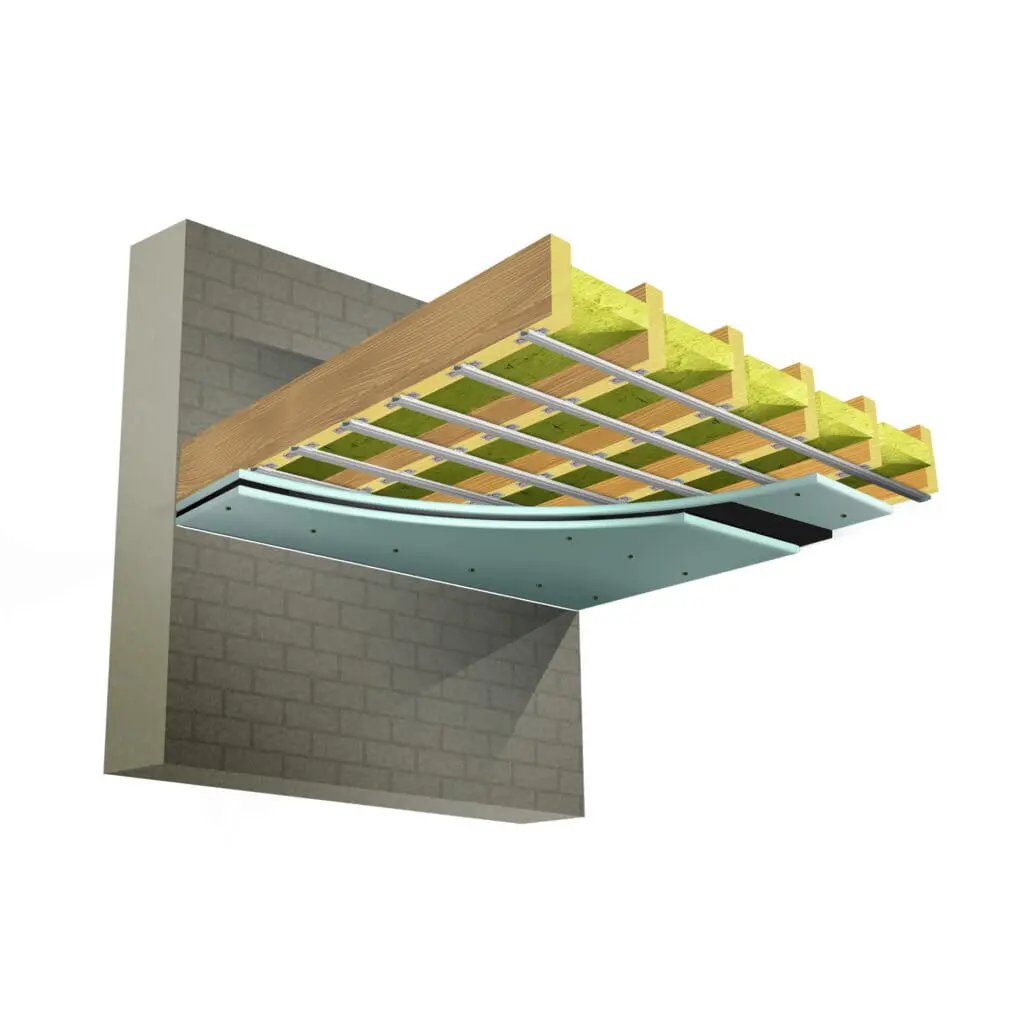
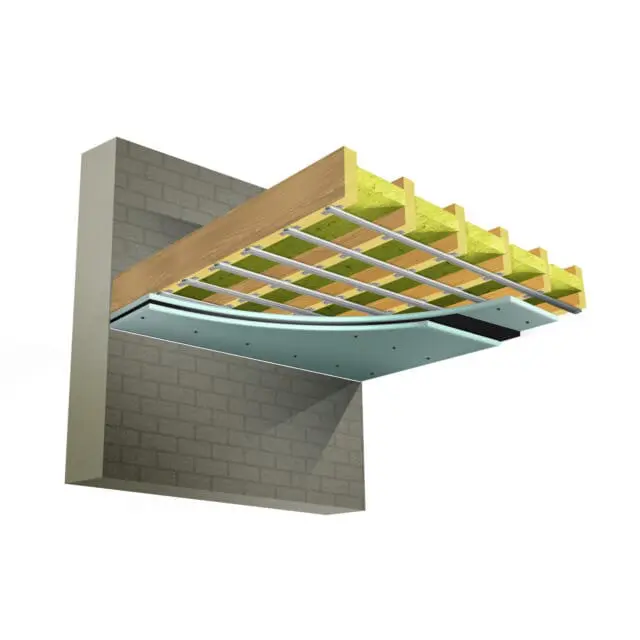
Soundproof timber joisted ceilings using the AcoustiClip Ceiling System
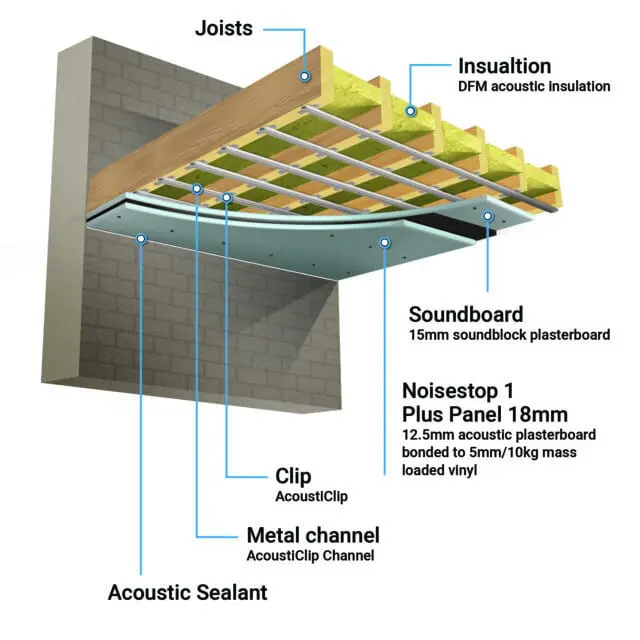
 

acousticlip timber joists componenets

AcoustiClip Timber Ceiling System

  • Acoustic insulation inside the ceiling joists to add mass and sound absorption, reducing airborne sound.
  • AcoustiClips and channels are fixed directly into the ceiling joists to decouple the existing from the new acoustic ceiling. Isolating the ceiling reduces noise transmission through the ceiling structure.
  • A layer of 15mm soundboard to add more mass and density to stop airborne sound.
  • The final layer of boards is the Noisestop 1 Plus Panel, combining acoustic plasterboard with a layer of 10kg/m² mass-loaded pre-bonded to the back of the plasterboard.
  • Acoustic sealant for sealing between the edges of the boards and around the perimeter to ensure a well-sealed seal and maintain acoustic integrity.

Key Benefits of Using the AcoustiClip Timber Ceiling System

✔ Superior Noise Reduction

By combining decoupling, high-density insulation, and mass-enhanced panels, this system achieves superior noise reduction compared to traditional builds.

✔ Effective Against Both Airborne and Impact Noise

The AcoustiClip system effectively reduces both impact and airborne noise for quieter spaces.

✔ Improved Comfort and Privacy

Rooms feel more peaceful, and privacy is enhanced — perfect for bedrooms, living spaces, home cinemas, offices or rental properties.

The AcoustiClip Advantage: A Complete Ceiling Soundproofing Solution

To sum up, effective acoustic ceiling design relies on three core principles:
  1. Decoupling the ceiling from the structure to break vibration transmission paths.
  2. Adding mass and density to resist airborne sound.
  3. Absorbing sound energy in cavities to minimise resonance and reflection.
The AcoustiClip Timber Ceiling System delivers on all three fronts:
🎯 Resilient AcoustiClips for decoupling
🎯 High-density acoustic insulation between joists
🎯 Mass-enhancing layers such as Noisestop 1 Plus, combining 10kg/m² MLV, and 12.5mm acoustic plasterboard
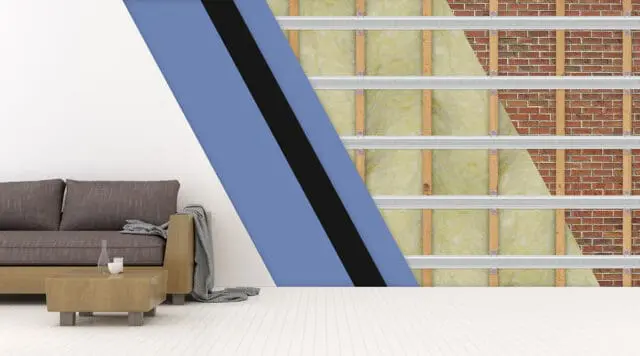
This engineered solution addresses common ceiling sound issues, making it ideal for reducing both airborne and impact noise across various projects.

AcoustiClip Timber Ceiling Soundproofing System Conclusion

In conclusion, soundproofing your ceiling with the AcoustiClip Ceiling System is the smartest choice because it tackles noise at its source rather than just masking it. By mechanically isolating the ceiling from the structure above, AcoustiClips dramatically reduce impact and airborne noise, delivering a noticeable improvement in acoustic comfort. The system is designed for reliability, easy integration with existing ceilings, and consistent, high-quality results—without sacrificing ceiling height or requiring complex construction. Durable, cost-effective, and proven in real-life applications, the AcoustiClip Ceiling System offers a long-term solution that transforms noisy rooms into quieter, more comfortable environments.

Get in touch

If you’d like any help or advice, or would like to chat to us, please call or fill out this form and we’ll be back in touch shortly