Soundproofing Ceilings FAQs

Soundproof Ceilings FAQs – Everything you need to know about soundproofing ceilings
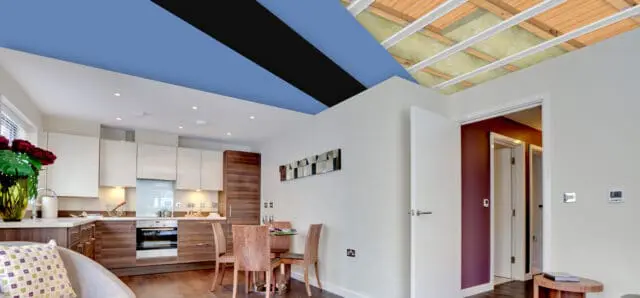
The answer is, of course, yes, you can soundproof a ceiling. There are several solutions you can use to soundproof your ceiling, and the best one for you will depend on the type of ceiling and the type of noise. We will review all the answers to determine which is most suitable on this page. Read through all the answers for the most effective way to soundproof ceilings.
Ceiling soundproofing uses the same key principles as walls and floors.
- Increase the ceiling mass to improve its ability to block airborne sounds
- Reduce the impact sound transmission (footfall and movement) through the ceiling by decoupling or isolating the ceiling from the original ceiling structure
- Improving the ceiling’s ability to absorb sound by combining mass/density with decoupling is key to successfully soundproofing a ceiling
The difference between airborne and impact sounds is that one is transmitted through the air (airborne), and the other is transmitted through the building’s structure (impact).
Airborne sound: Sounds that transmit through the air. Familiar sources of airborne sound include talking, TV, and music noise. All of these noise types transfer through the air, which is why we class them as airborne sound.
Impact sound: Sounds that transmit through structures via vibration. Familiar sources of impact noise include moving across a floor and dropping objects on it. The impact on the floor is transmitted through the building’s fabric, becoming audible once it has passed from one side to the other, i.e., from the floor via footfall, through the joists and the ceiling into the room below.
The most effective method of soundproofing a ceiling is to add mass/density, increase isolation, and improve its sound absorption.
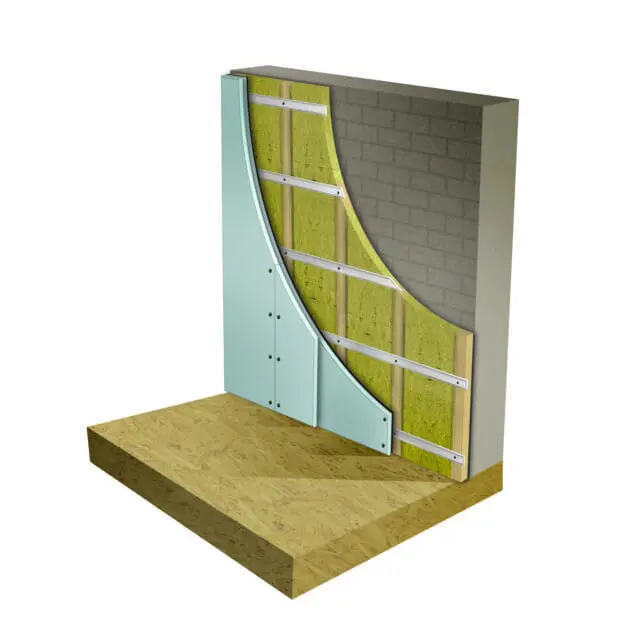
Acoustic insulation: Place acoustic insulation inside the cavity of the ceiling joists to add mass/ density and improve sound absorption
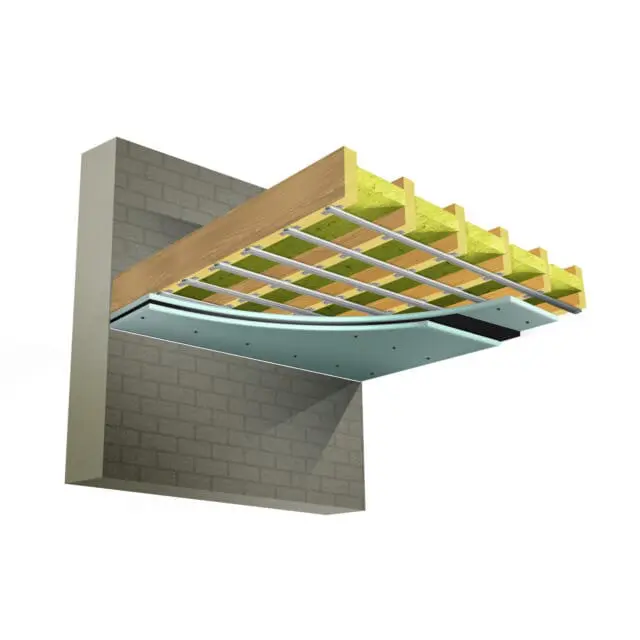
Decoupling system: Use a sound isolation system to decouple the ceiling. Products like the AcoustiClip are ideal for creating a decoupled ceiling.
Soundproof plasterboard: Denser than standard boards, soundproof or acoustic plasterboard adds more mass to the ceiling, blocking even more airborne noise.
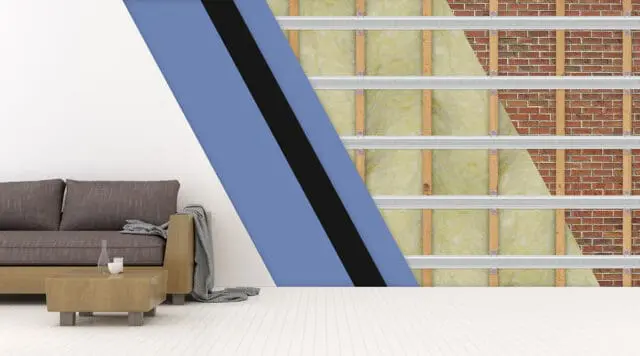
Specialist soundproofing panels: Boarding that incorporates mass-loaded vinyl with acoustic plasterboard will improve the perfomance of the plasterboard by adding even more mass and reducing vibrations through the board.
Soundproofing systems: Individual products combined to form a ceiling soundproofing system will be more effective than a single product. At Noisestop Systems, we provide a soundproofing system for timber joists and concrete ceilings:
Soundproof ceiling systems
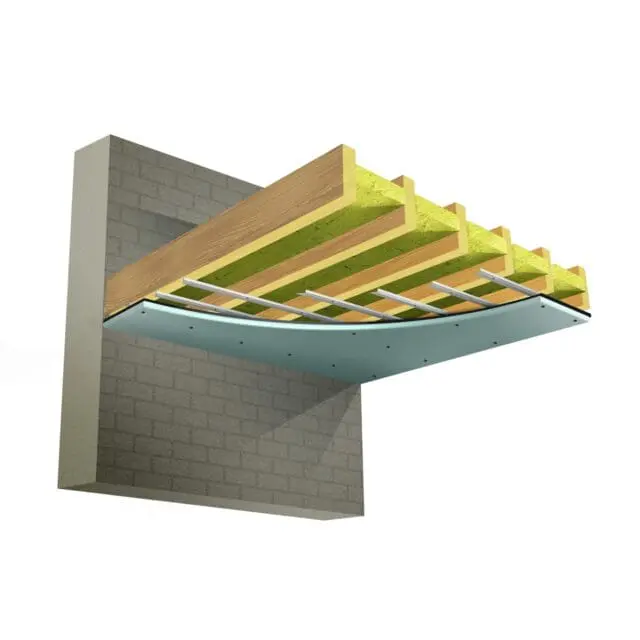
Timber joist soundproofing system
You must soundproof the entire area. Trying to soundproof part of the ceiling will not work, as sound will leak through unsealed areas.
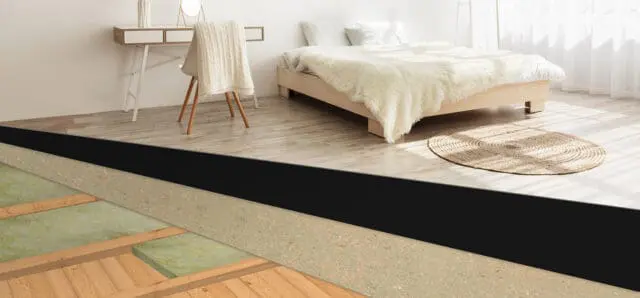
If possible, the best way to soundproof against impact sounds is to soundproof the floor above. When it is not possible to soundproof the floor, there are options for soundproofing the ceiling to stop impact noise.
The best way to soundproof a ceiling to stop impact noise is to isolate the existing structure from the new acoustic ceiling. If you have plenty of height in the room, you could install an independent ceiling with no contact points between the old and the new ceiling. However, if you don’t have sufficient head height, then you will need to use a solution that is attached but decoupled.
The best method for decoupling a ceiling is to use sound-isolation clips. A clip like the AcoustiClip attaches to the ceiling joist or directly to a concrete ceiling and acts as a shock absorber, reducing vibrations through the ceiling caused by impact on the floor above.
The AcoustiClip system can be applied to timber and concrete ceilings to enhance their sound insulation against impact noise by isolating the ceiling. You can find out more about either of these solutions here.
AcoustiClip Timber Ceiling System
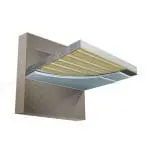
The best way to soundproof a ceiling against airborne noise is to add mass and sound absorption.
Removing the existing plasterboard and filling the joists with acoustic insulation will prevent the empty cavity from acting as a drum and amplifying sound. High-density sound-insulation slabs block and absorb airborne sound from passing through the ceiling.
More mass can be added using soundproof plasterboard, which is denser than standard plasterboard. For the best level of noise reduction, combine soundproof plasterboards with specialist soundproof panels like the Noisestop 1 Plus Panel with mass-loaded vinyl to enhance the perfomance by increasing mass and reducing vibrations that carry airborne sound.
In most cases the ceilings will need to be removed. In certain situations, you might be able to retain the existing ceiling and install a new one below. Doing this tends to lower the ceiling height significantly, and in many cases, this is not possible due to the room’s head height.
By removing the ceiling, you will expose the ceiling cavity, allowing you to insulate between the joists before installing the soundproofed ceiling.
If you do remove the ceiling, you will find that with most solutions, the drop in ceiling height is minimal compared to retaining the ceiling
It is advisable to avoid cutting too many holes into the nes soundproof ceiling. If you do add spotlights, consider using acoustic hoods over the back of the lighting to keep the acoustic integrity. Surface-mounted lighting or individual pendants are recommended to ensure you get the best level of sound insulation out of your soundproof ceiling
It is important to check individual solutions, but as a general rule, acoustic ceiling systems that use two layers of acoustic plasterboard would meet a one-hour fire rating. All of our AcoustiClip soundproof ceiling systems are supplied with two layers of soundboards, which meet these requirements.
Hopefully, you have found answers to your ceiling soundproofing questions. Take a look at our ceiling soundproofing products page and begin your ceiling soundproofing journey. If you do need more help, send us an enquiry or call 01423 339163 and speak with one of our helpful team members.