
Back to Help, Info & Tips
Soundproofing Walls Using The AcoustiClip System
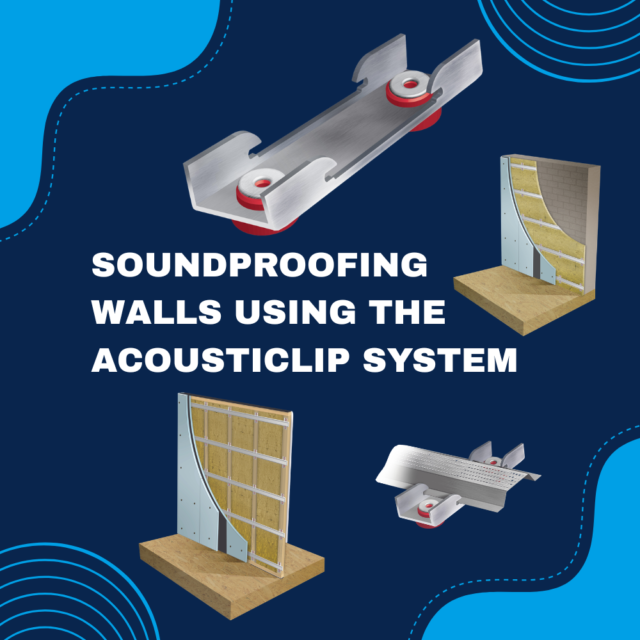
Why the AcoustiClip Soundproofing System Is the Best Way to Soundproof Walls
Unwanted noise disrupts homes, studios, and commercial spaces. Simple wall thickening isn’t enough for real soundproofing. The AcoustiClip system excels by combining mass, decoupling, absorption, and damping to block both airborne and structure-borne sound. Here’s why the AcoustiClip system is so effective.
The Science Behind Effective Soundproofing
Sound travels in two main ways:
1. Airborne Noise
This includes voices, TV sound, music, traffic, and general household noise. Airborne sound waves hit a wall, causing it to vibrate and transmitting the noise to the other side.
2. Structure-Borne (Vibration) Noise
This includes impact noise, bass frequencies, and low-frequency vibrations. These sounds travel directly through the building structure — walls, studs, joists, and floors.
To properly soundproof a wall, you must:
- Block sound with mass
- Absorb sound within cavities
- Isolate (decouple) structures to stop vibration transfer
- Dampen vibrations to reduce resonance
The AcoustiClip system successfully integrates all four of these soundproofing elements.
AcoustiClip – The Decoupling Foundation
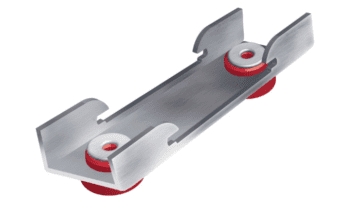
AcoustiClip, a high-performance resilient isolation clip, forms the basis of the system
Why Decoupling Matters
If plasterboard is fixed directly to studs or masonry, vibrations pass through. That’s why simply adding another plasterboard layer often disappoints.
AcoustiClip decouples the new wall lining from the existing structure, actively breaking the vibration path.
- It creates a mechanical break.
- It isolates the new surface from structural vibrations.
- It greatly reduces the transfer of low-frequency bass and impact noise.
By mounting furring channels on isolation clips, the new wall lining “floats” independently. This dramatically reduces vibration transmission — one of the most difficult types of noise to control.
DFM Acoustic Insulation – Absorption and Added Mass
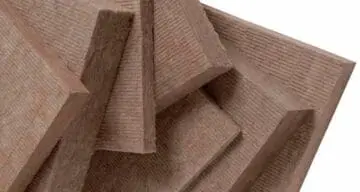
DFM acoustic insulation is crucial inside wall cavities for absorption and mass
What It Does:
- Absorbs airborne sound energy within the cavity.
- Reduces internal resonance.
- Prevents “drum effect” between wall layers.
- Adds additional density to the wall structure.
Without acoustic insulation, sound can reverberate inside the cavity, lowering overall performance. DFM insulation works by transforming sound energy into small amounts of heat, preventing reflection and amplification within the void.
Acoustic Plasterboard – Increasing Mass and Density
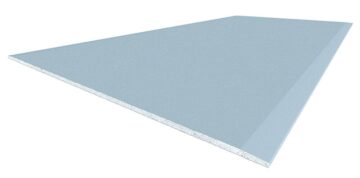
Acoustic plasterboard is denser than standard, so it’s better for blocking airborne noise
When installed onto the isolated AcoustiClip system:
- It adds substantial mass.
- It lowers the wall’s natural resonance frequency.
- It makes it more difficult for airborne sound to energise the structure.
Additionally, the system includes a further performance layer.
Noisestop 1 Plus Panel – Mass & Damping in One Layer
Multi-layered soundproofing panel adds mass and sound damping
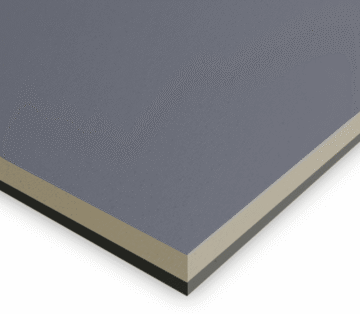
The Noisestop 1 Plus Panel further boosts performance. This specialist panel combines:
- High-density acoustic plasterboard
- A 10kg/m² mass-loaded vinyl (MLV)
Why This Is So Effective
Mass-Loaded Vinyl (MLV) adds flexible mass and damping properties. Unlike rigid materials, MLV absorbs vibrational energy, reducing resonance.
This combination:
- Adds significant extra mass
- Improves low-frequency performance
- Reduces vibration transmission
- Enhances damping between layers
The result is a wall system that performs exceptionally well against:
- Loud voices
- Music
- Bass frequencies
- TV noise
- General household impact vibration
How the Complete System Works Together
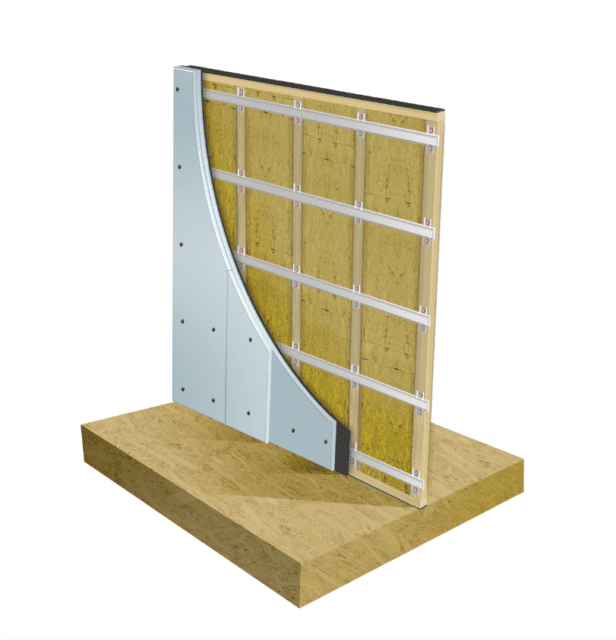
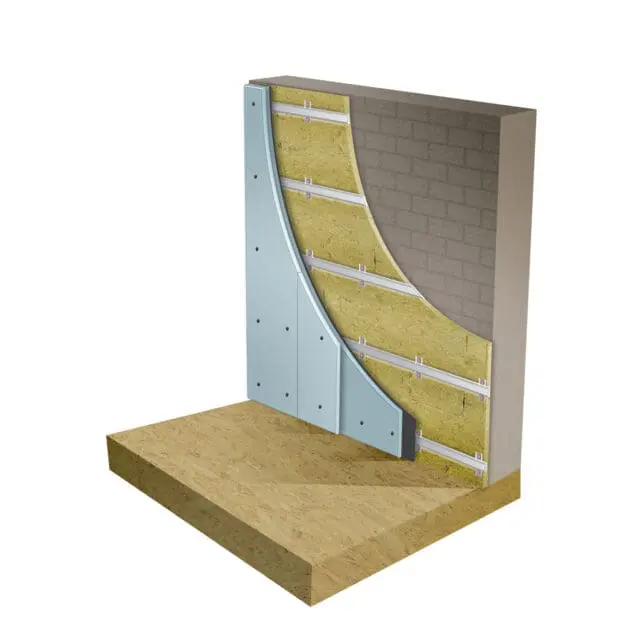
The reason AcoustiClip is considered one of the best wall soundproofing systems is that it uses a multi-layered acoustic solution:
|
AcoustiClip
|
Decouples the structure and reduces vibration transfer |
|
DFM Insulation
|
Absorbs airborne sound inside cavities |
|
Acoustic Plasterboard
|
Adds mass to block airborne noise |
|
Noisestop 1 Plus Panel (MLV)
|
Adds mass + damping for superior vibration control |
The combined products result in an acoustic wall that will:
- Stop airborne sound waves from passing through.
- Prevent structural vibration transfer.
- Reduce resonance within cavities.
- Lower the wall’s vibrational energy.
- Improve performance across low, mid, and high frequencies.
It’s not just adding thickness — it’s engineered sound control.
Applications for the AcoustiClip system
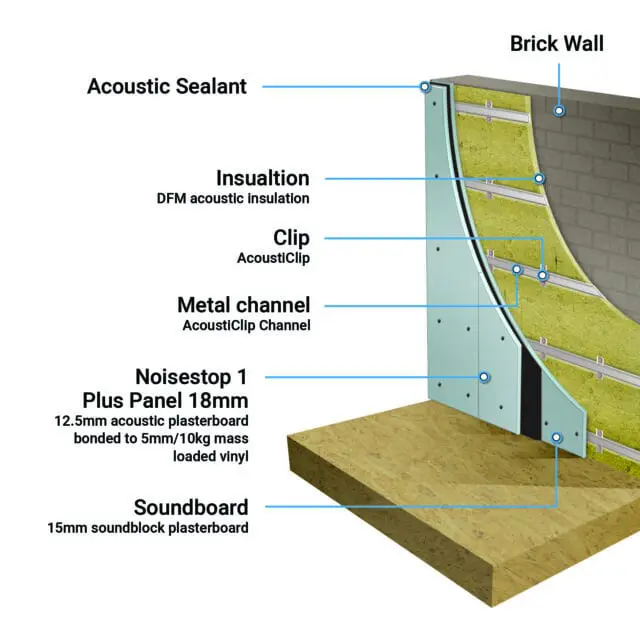
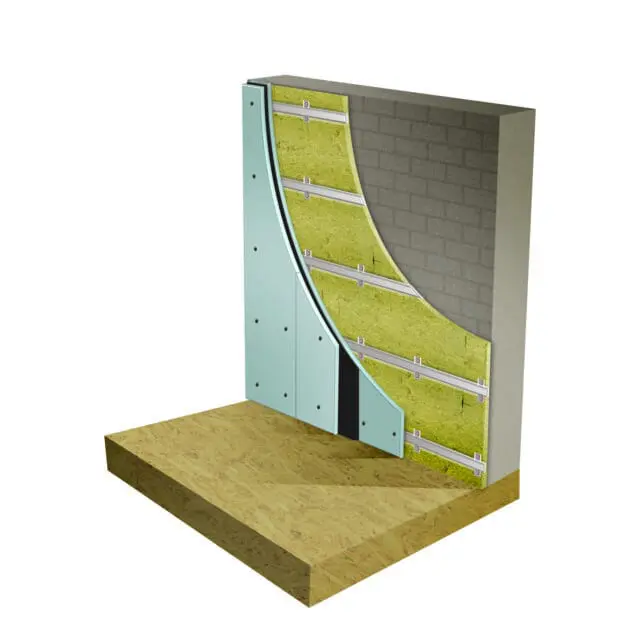
Soundproofing Party Walls (Noisy Neighbours)
One of the most common uses is upgrading party walls in terraced and semi-detached houses.
- Reduces loud conversations and shouting.
- Controls TV and music noise.
- Significantly reduces lower bass transmission.
- Minimises vibration from shared structures.
Homeowners regain peace because the system eliminates neighbour noise without major structural alterations.
AcoustiClip Direct Party Wall Soundproofing System
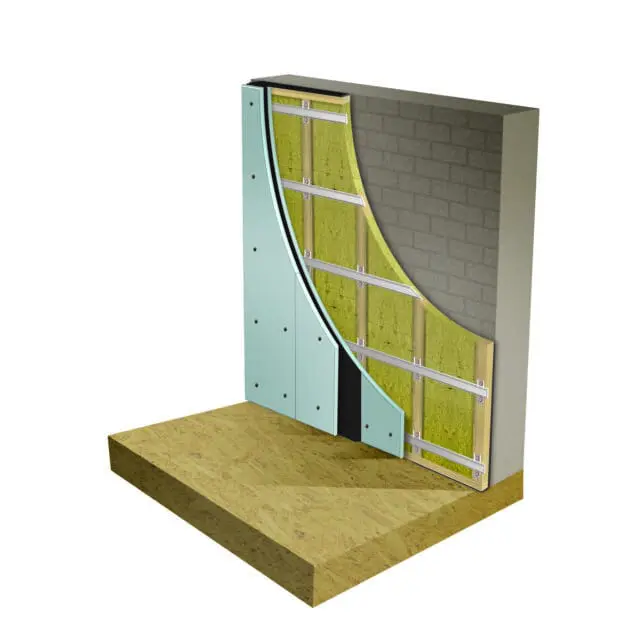
Studio Rooms & High-Performance Spaces
Studios require higher levels of acoustic control and high-level neighbour noise.
- Prevents sound escape.
- Controls low-frequency energy.
- Reduces structure-borne transmission.
- Creates a professional isolation environment.
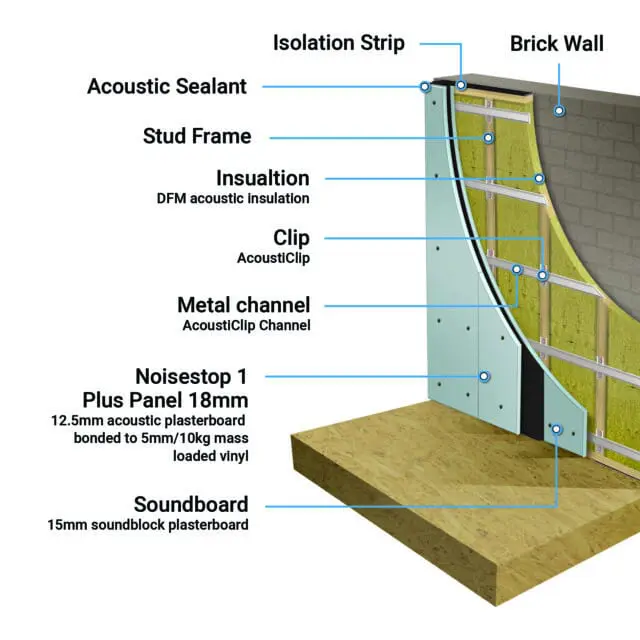
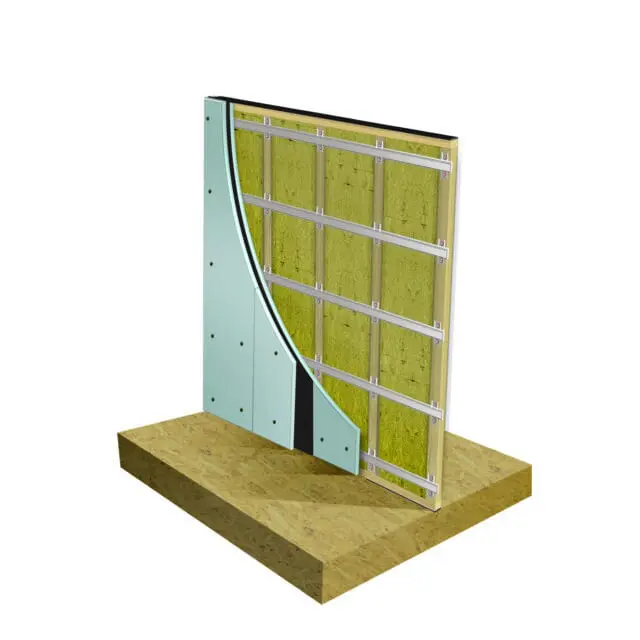
- Create a room within a room
It’s ideal for:
- Home studios
- Music practice rooms
- Podcast rooms
- Media rooms
- Party walls
AcoustiClip Independent Wall Soundproofing System
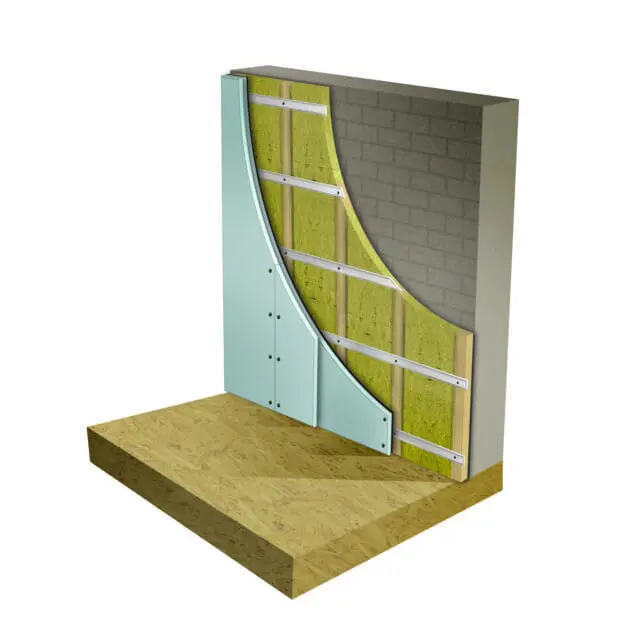
Stud Wall Soundproofing Upgrades
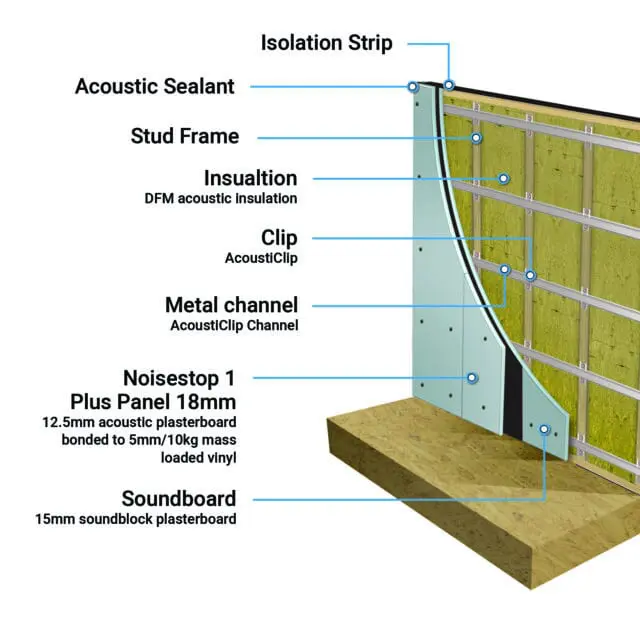
Standard stud walls offer very little sound insulation. Adding the AcoustiClip system:
- Dramatically increases speech privacy.
- Reduces room-to-room sound leakage.
- Improves separation between the bedroom, office, and living spaces.
It’s a practical solution for modern open-plan and timber-framed homes.
AcoustiClip Stud Wall Soundproofing System
Why the AcoustiClip system outperforms other types of soundproofing
Many DIY solutions fail because they address only one principle — usually by adding mass. The AcoustiClip system works because it combines the key elements of soundproofing:
- Decoupling – isolating the walls to reduce sound transfer through direct contact.
- Mass – Making it harder for sound to pass due to more weight.
- Absorption – Absorbs sound waves as they pass through the wall.
- Damping – Reducing vibrations between solid surfaces reduces noise transfer.
By addressing both airborne and vibration noise simultaneously, it delivers significantly higher performance than simply adding extra plasterboard.
The Result: Real-World Noise Reduction
When installed correctly, the AcoustiClip soundproofing system transforms a noisy wall into a high-performance acoustic barrier.
- Noticeably quieter rooms
- Reduced bass transmission
- Increased privacy
- Greater comfort
- Professional-level sound control
Effective wall soundproofing isn’t about one miracle product — it’s about a system.
Combining AcoustiClip isolation, DFM insulation, acoustic plasterboard, and the Noisestop 1 Plus Panel with 10kg mass-loaded vinyl creates a full solution tackling sound at every stage.
Whether you’re dealing with noisy neighbours, building a studio, or upgrading internal walls for privacy, this system delivers performance where it matters most — stopping both airborne and vibration noise from travelling through walls. For truly effective soundproofing, this system offers a proven, professional solution.
Get in touch
If you’d like any help or advice, or would like to chat to us, please call or fill out this form and we’ll be back in touch shortly