How to Soundproof a Ceiling

How to soundproof ceilings against noisy neighbours
Understand the type of noise you are dealing with
- Airborne noise: voices, TV, music
- Impact noise: footsteps, furniture moving, dropped items
How do you soundproof a ceiling against airborne noise?
The best method for soundproofing ceilings against airborne noise is to increase the mass and sound absorption of the ceiling. This advice applies mainly to ceilings with joists, as these tend to be affected by airborne noise transfer more than concrete ceilings, which are much higher in mass and density and therefore naturally block airborne sound.
The best method of soundproofing ceilings with joists against airborne noise
Increasing the ceiling’s mass and its ability to absorb sound is the best way to block unwanted noise in ceilings constructed with joists.
Sound insulate the cavity between the joists to improve the ceiling’s mass and absorption
Empty cavities between the ceiling and the floor above act as a drum, amplifying sounds and potentially enhancing noise transfer between the floors. Insulating the cavities between the joists will add mass and sound absorption, which are required to reduce airborne sound from passing between rooms through the ceiling. Fitting acoustic insulation inside the ceiling cavities will block and absorb noise, reduce reverberation, and eliminate the drum effect of the empty cavity.
Acoustic insulation between the ceiling joists adds mass and sound-absorbing properties, reducing airborne sound.
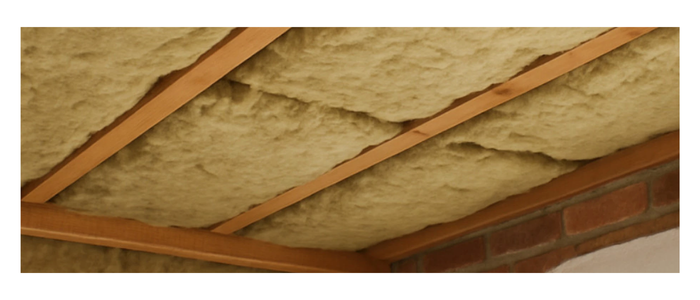
What’s the best acoustic insulation for soundproofing ceilings?
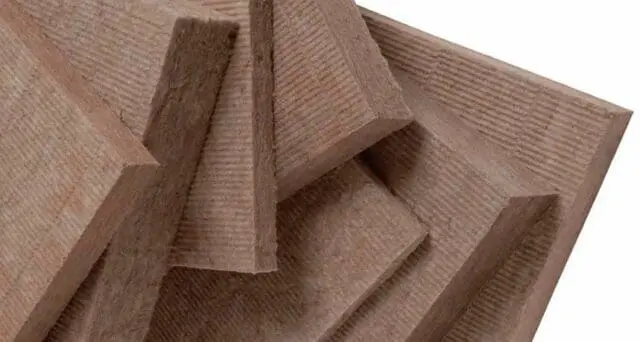
It is recommended that you use 100mm thick acoustic insulation slabs between the joists. It is not necessary to fill the cavity, as this could form a bridge through which sound can transfer between the floor and the ceiling below.
The best density to choose is 60kg/m³, as this provides the optimal level of sound insulation without spending money on more expensive densities that will not improve the overall level of sound insulation.
Recommended sound insulation slabs for soundproofing ceilings
- Thickness 100mm
- Density 60kg/m³
Add more mass and density to ceilings using soundproof plasterboards
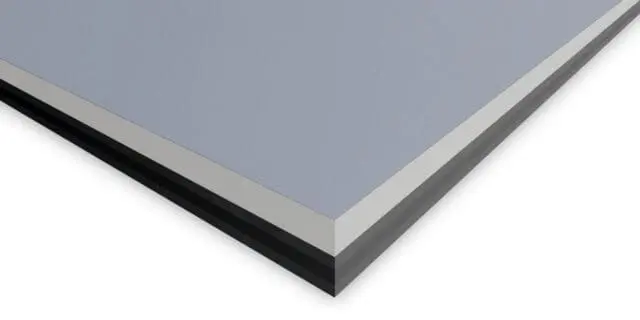
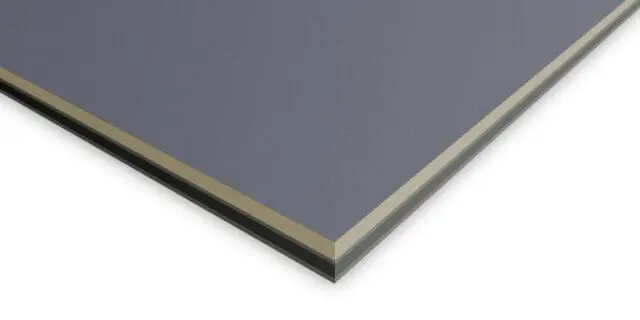
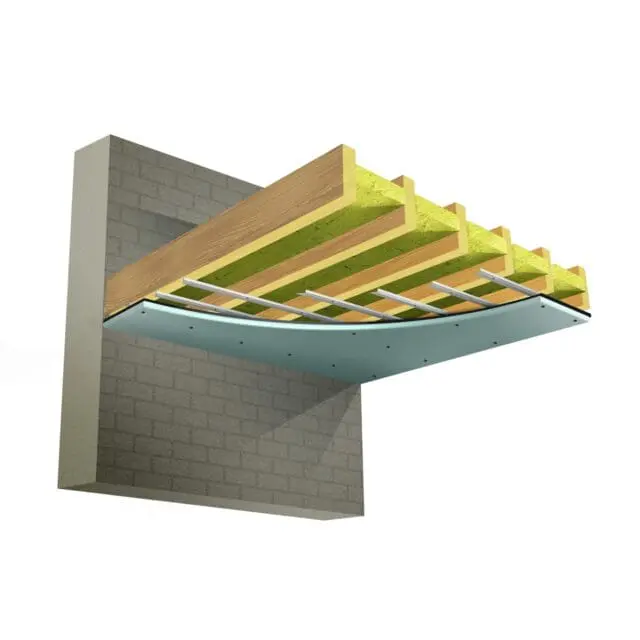
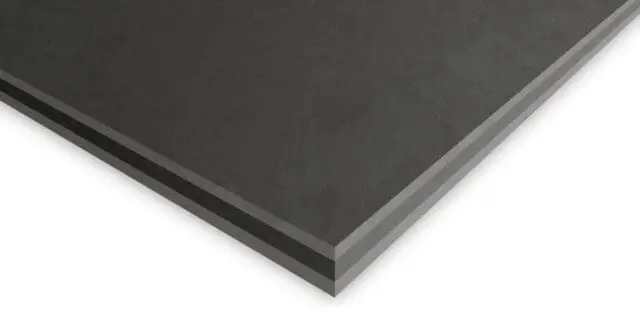
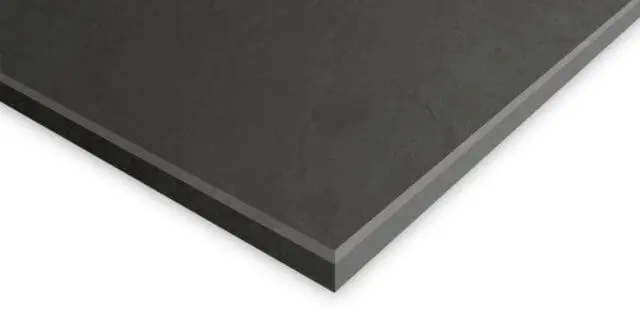
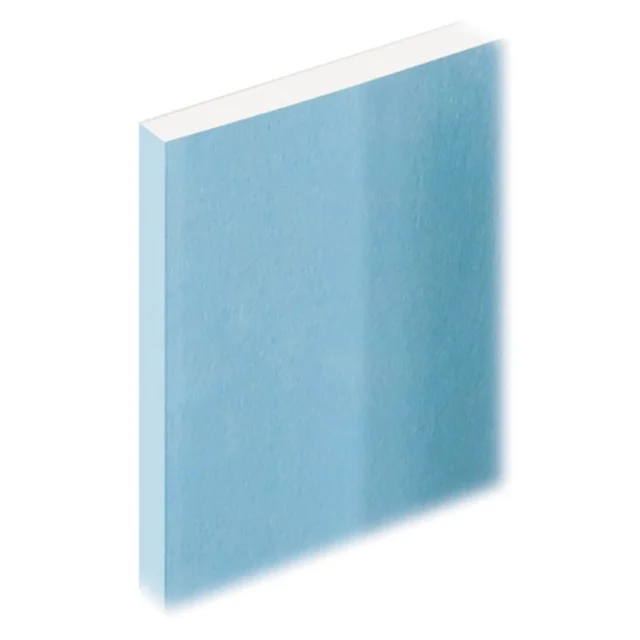
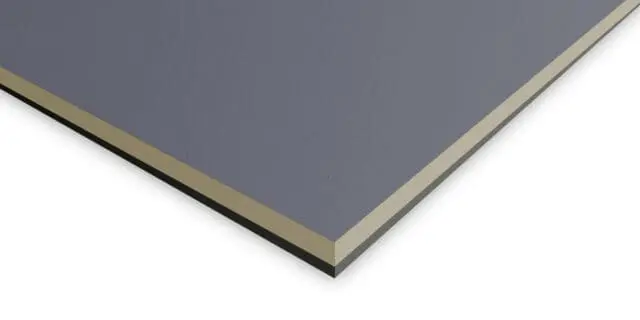
The best plasterboard for soundproofing ceilings is specialist soundproof plasterboard. This type of plasterboard is denser than standard boards, which means it will block more airborne noise. Best practice for installing plasterboards to ceilings from an acoustic viewpoint and to meet fire regulations is to double-board the ceiling. Two layers of boards allow you to stagger the first joints on the first layer, making it harder for sound to transfer through. Reduce flanking sound between the ceiling and walls by ensuring the plasterboard doesn’t contact the walls.
How to soundproof ceilings against impact noise
Soundproofing ceilings against impact noise can be more difficult if you can not access the floor above. Soundproofing against impact noise is better if you can stop the sound at the source and soundproof the floor. Unfortunately, if you can’t access the floor from above, then the best method of soundproofing the ceiling against impact noise is to decouple the ceiling from the joist.
Decoupling or isolating the ceiling stops vibrations from carrying the sound
When movement across the floor occurs, the sound vibrates down through the ceiling into the room below. Once it passes through the ceiling, it becomes a sound wave and is audible in the room below. To stop the vibrations carrying sound from the ceiling’s structure into the room, you need a break in the structure to prevent them from passing between the surfaces. Vibration is significantly reduced if surfaces are not connected.
Independent ceilings ensure the highest levels of sound insulation against impact sound.
Building a completely separate ceiling below the existing one is the best method to stop sound from passing between rooms through the ceiling. With no direct path from the existing ceiling to the new structure, sound will be significantly reduced, as it will be much harder for it to carry through two independent structures.
The drawback to building an independent ceiling is the potential loss of ceiling height. Independent ceilings can require a significant drop in ceiling height, depending on the room’s span. Larger rooms will need deeper joists, and rooms with relatively low ceilings will probably not be able to lose the ceiling height required for a completely independent ceiling.
The good news is that there are alternatives to an independent ceiling. It is possible to decouple a ceiling without losing significant head height and ensuring a high level of noise reduction using sound isolation clips.
Independent ceilings decoupled using sound isolation clips
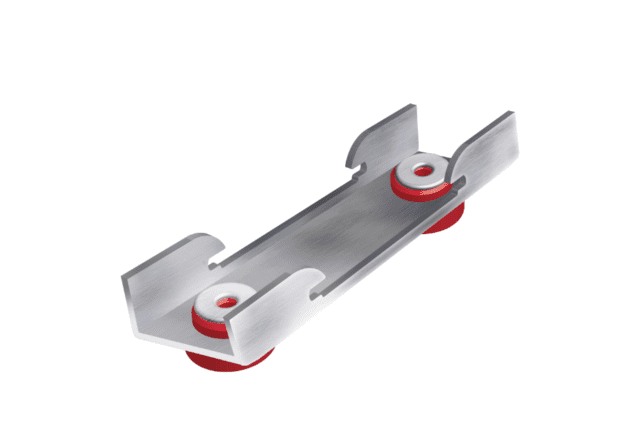
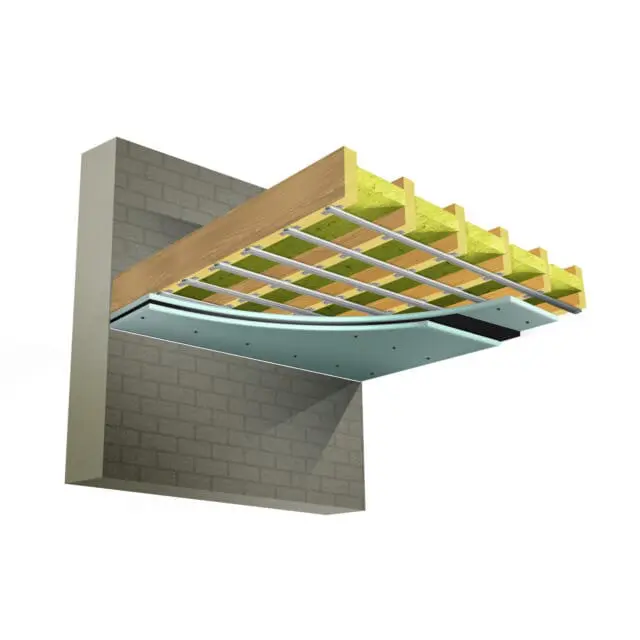
You want to stop noise from coming through your ceiling, but you can’t build a new independent ceiling because of the amount of space you’d lose. The answer is to use isolation or decoupling clips attached directly to the ceiling joist. These specially designed brackets are designed to reduce vibrations that travel through the joist into the ceiling. Acting like a shock absorber in a car, the isolation bracket absorbs vibrations before they can transfer to the ceiling and then to the room below.
AcoustiClip sound isolation clip for soundproofing ceilings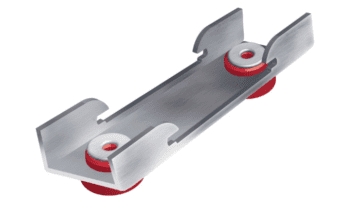
Sound isolation clips for soundproofing ceilings
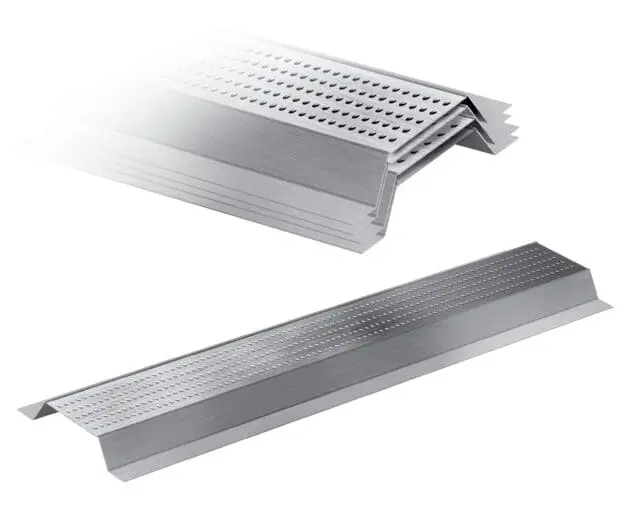
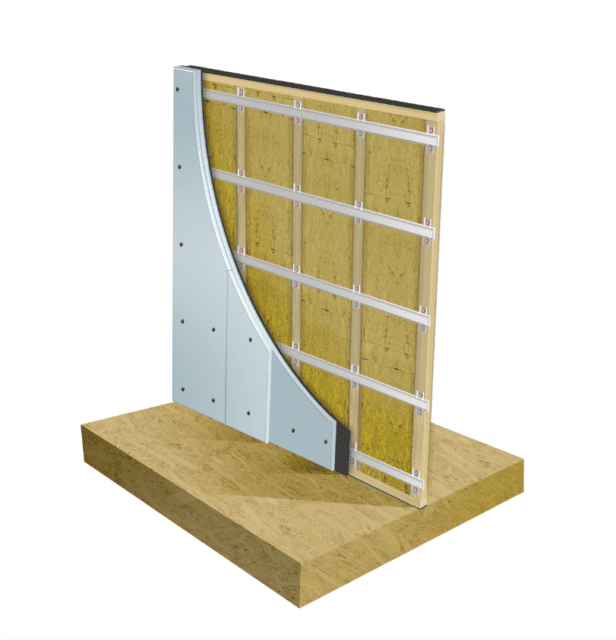
Sound isolation clips are fitted into ceiling joists to form the base of the new acoustic ceiling. As a shock absorber, the clip reduces sound that would otherwise vibrate through the ceiling’s structure. Once the decoupling clips have been fitted, a metal furring channel clip is installed, and the plasterboard ceiling is screwed directly into the furring channel. The new acoustic ceiling is decoupled and independent of the existing structure, using the AcoustiClip, significantly reducing sound transfer without sacrificing head height.